
There’s something about entering a house and finding a space dedicated to people wanting to be in it. Not a living room with a television but a game room that forces people to put down their phones and focus on interactivity instead. The difference between something that gathers dust and something that becomes the heart of a home is the intention behind it.
Starting With the Right Foundation
The heart of many a game room revolves around a quality pool table. It’s an investment that sets the tone for everything else. When considering options, it’s more than just the table itself. A poorly made, wobbly table turns people off the game pretty quickly since no one wants to play on this equipment.
That being said, you must ensure you have the correct table first. There is a rhyme and reason behind the size because you need enough space to shoot from all angles; there’s nothing worse than having a player jab their cue into a wall. Typically, people need at least five feet of space on either side, meaning a seven-foot table may be better for a game room than trying to squish an eight-foot table into one. If your room is especially small, do not go for the full-size version.
Equipment That Actually Gets Used
There’s nothing worse than equipment that becomes dusty because it’s not accessible or usable. Thus, a billiard store Adelaide can help give recommendations for the table, accessories, and more, setting specific budgets and space dimensions that may save headaches down the road at later times. You don’t want to purchase something only to realize six months later that it’s not what you needed.
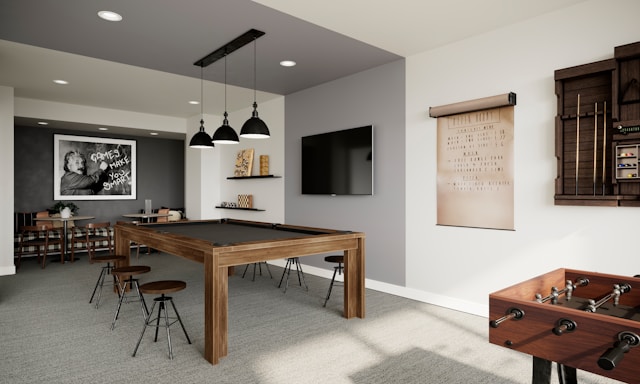
Moreover, little things make playing easier. A good-looking table is essential but so is good lighting; you don’t need professional tournament lighting, but the table should be thoroughly lit (minus glare). A good set of sticks (not the warped ones that came with the set), a wall-mounted rack to keep them organized, and proper chalk all incentivize people to want to play.
Creating the Right Atmosphere
The best atmosphere is what differentiates a game room from a room with a game table in it. Good seating around the perimeter is well-advised so that when players are waiting their turns or are between games, they do not need to stand around awkwardly. Bar stools are best as they do not take up much flooring space yet afford everyone a place to sit down comfortably.
People don’t realize how much lighting plays a difference. The area should be soft and inviting; you do not want it to feel like a busy tournament hall but rather not like a basement either. Because of this, layered lighting may work best—good overhead for the table, some scattered light options and maybe some accent lights for desired mood. Dimmer switches are preferred for afternoons versus evening games.
Sound proves not to be an issue either; decent speakers that can play music without being intrusive to conversation make areas feel homey. There’s no need for a home cinema setup in this space but having music lightly playing is nice.
Making Space for Everyone
The best game rooms accommodate varying energy levels. Not everyone wants to play pool all night; therefore, additional options keep people engaged. A small bar area means that people do not have to trek back upstairs to the kitchen to get beverages each time; even having a mini-fridge and small counter goes a long way.
Another good idea is seating arrangements that encourage conversation. Set up furniture so that those waiting their turns can chat with friends comfortably if they’re not in the hot seat. Some of the best conversations happen between games.
Practical Considerations That Matter
Climate control is an underrated consideration until it’s too late. If game rooms are based in garages or basements, they must have proper HVAC systems for optimal air flow during all seasons; if it’s miserable in there during hot or cold months, no matter how great the equipment is, it will never get used.
Storage solutions help prevent clutter; wall-mounted racks for sticks, a small cabinet for any extra supplies, general spaces where everything has its place helps maintain the appeal of the room. When things have homes, they are put back in those homes more often and the room looks far more usable.
Floors should be easy enough to maintain; things happen, wheels on chairs move about; this isn’t going to be treated as conservatively as other rooms in the house. Carpets can work but they should be commercial grade. Vinyl or laminate or tile tends to hold up better over time.
The Social Element
Ultimately what makes a game room thrive is its ability to bring socialization. People talk over shots, there’s competition and skill building involved, and it becomes an integral part of your house instead of just another room that happens to be there.
Use it enough, and it won’t become just another forgotten space. Having friends over for game nights, teaching kids how to play, even learning themselves or just screwing around between dinner bring value to this space. The spaces that work best are those that bring natural fits in how people actually live and spend time together.
The best game room grows into its usefulness over time from where people expected just to play pool eventually become where they want to go when that’s not working well, where people can gather, and where stories and memories are made—the best part about making a game room is facilitating those stories around such a traditional pastime.