


Key Takeaways
- Virtual reality and 3D tours allow buyers to explore properties remotely, enhancing convenience and accessibility.
- Artificial intelligence provides personalized property recommendations and predictive market analyses.
- Online platforms streamline the buying and selling process by providing comprehensive property information and digital transaction capabilities.
- Blockchain technology introduces transparency and security in real estate transactions.
- Mobile applications facilitate on-the-go property searches and real-time communication between buyers, sellers, and agents.
Table of Contents
- Virtual Tours and 3D Walkthroughs
- AI-Driven Analytics and Recommendations
- Online Platforms and Digital Transactions
- Blockchain for Secure Transactions
- Mobile Applications in Real Estate
- Conclusion
In recent years, technological advancements have significantly transformed the real estate industry, making home buying and selling more efficient and accessible. From virtual tours to AI-driven analytics, these innovations are reshaping the traditional landscape of property transactions. For instance, West Seattle real estate agent Molly Kemper, of Scott Monroe & Molly Kemper, a top-performing team in Washington, leverages these technologies to provide clients with seamless, informed experiences in West Seattle.
Virtual Tours and 3D Walkthroughs
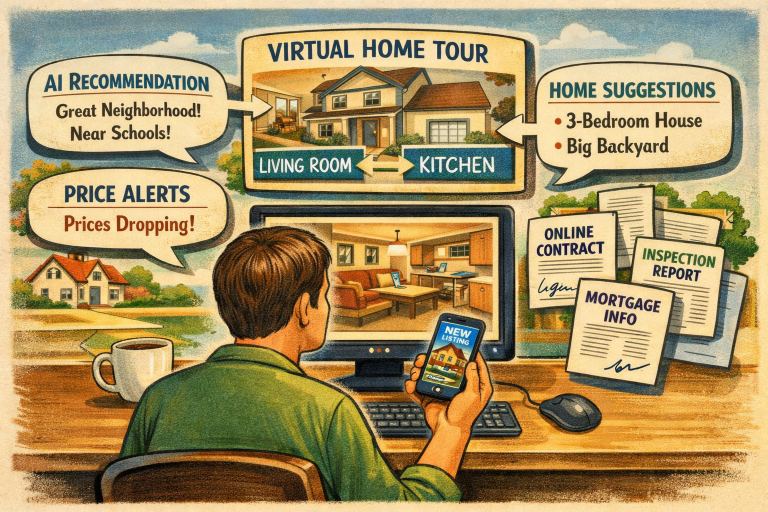
Gone are the days when potential buyers had to physically visit multiple properties to get a feel for their options. Virtual reality (VR) and 3D tours now allow buyers to explore homes from the comfort of their own spaces. This technology provides an immersive experience, enabling users to navigate through properties as if they were there in person. Such innovations not only save time but also broaden sellers’ reach, attracting international or out-of-state buyers who can make informed decisions without the need to travel.
Thanks to advancements in camera technology and sophisticated software, these tours now offer incredibly detailed, true-to-life representations of homes. Buyers can experience properties at their leisure, examining everything from room layouts to finishes and fixtures, which helps them narrow down their choices before scheduling an in-person visit. Sellers, too, benefit by presenting their homes in the best possible light around the clock, regardless of time zones or scheduling conflicts. Real estate agents can also host live virtual open houses, offering guided walkthroughs for interested buyers globally.
AI-Driven Analytics and Recommendations
Artificial intelligence (AI) is revolutionizing the way buyers find their ideal homes. By analyzing vast amounts of data, AI algorithms can provide personalized property recommendations based on individual preferences, budget, and lifestyle. Additionally, AI tools can predict market trends, helping sellers price their homes competitively and assisting buyers in making informed investment decisions. For instance, platforms like Zillow and Redfin utilize machine learning to analyze millions of listings and user interactions in real time, tailoring recommendations accordingly.
Beyond property matching, AI-powered chatbots and virtual assistants are becoming indispensable tools for both agents and clients. These technologies provide instant responses to inquiries, help manage schedules, and streamline communication among all parties involved in a transaction. Automated valuation models (AVMs) leverage AI to generate real-time home value estimates, providing crucial insights for both buyers and sellers. AI-driven tools can even recognize features in listing photos to tailor suggestions more effectively and improve user satisfaction.
Online Platforms and Digital Transactions
The rise of online real estate platforms has streamlined the buying and selling process. Websites and apps offer comprehensive property listings, complete with high-quality images, detailed descriptions, and neighborhood information. Many platforms also facilitate digital transactions, allowing for online offers, negotiations, and even closings. This digital shift has made the real estate market more transparent and accessible, reducing the time and paperwork traditionally involved in property transactions.
It’s not just buyers who benefit; sellers also gain more exposure for their properties through syndicated listings and targeted marketing features. Advanced algorithms ensure listings reach the most relevant audience, maximizing their visibility. E-signatures and secure online document management platforms have paved the way for fully remote closings, an essential feature in today’s fast-paced world. From document storage to automated compliance checks, digital platforms reduce administrative burdens and improve the overall client experience.
Blockchain for Secure Transactions
Blockchain technology is introducing new levels of security and transparency to real estate transactions. By creating immutable records of property ownership and transaction history, blockchain reduces the risk of fraud and errors. Smart contracts, self-executing contracts whose terms are written into code, can automate and enforce agreements, ensuring that all parties fulfill their obligations. This innovation has the potential to simplify complex processes like title transfers and escrow, making transactions faster and more reliable.
The use of blockchain also streamlines verification and due diligence processes, reducing delays that typically arise from manual checks. Buyers, sellers, and agents can all access relevant property records quickly, while privacy controls ensure sensitive information remains secure. Various pilot projects and startups worldwide are already testing blockchain-based solutions for real estate registries and digital identities, signaling a move toward more robust, efficient transaction ecosystems in the near future.
Mobile Applications in Real Estate
Mobile applications have become indispensable tools in the real estate industry. They allow users to search for properties, schedule viewings, and communicate with agents on the go. Features like push notifications keep buyers updated on new listings that match their criteria. At the same time, augmented reality (AR) capabilities enable users to visualize how a space might look with different furnishings or renovations. These apps enhance the user experience by providing real-time information and interactive features that cater to the modern, tech-savvy consumer.
Mobile technology also supports location-based services, allowing users to access crucial neighborhood details in real time, including crime rates, school ratings, and even walkability scores. Integrated messaging and video chat functions make agent-client communication faster and more personal, while mortgage calculators and affordability tools help buyers make quick, informed decisions. As these apps integrate with wearable tech and smart home devices, the potential for more personalized and proactive real estate experiences continues to grow.
Conclusion
Technology is undeniably reshaping the real estate landscape, offering tools and platforms that make buying and selling homes more efficient, transparent, and user-friendly. Embracing these innovations can provide a competitive edge in today’s market, whether you’re a buyer seeking your dream home or a seller aiming to reach a broader audience. As the industry continues to evolve, staying informed about technological advancements will be key to navigating the future of real estate.
Looking ahead, the integration of emerging technologies such as drones for aerial photography, Internet of Things (IoT) devices for smart homes, and big data analytics for urban planning promises to revolutionize further how properties are marketed, evaluated, and managed. Agents and clients alike have more knowledge than ever before, empowering smarter decisions for everyone involved. As the boundaries between digital and physical experiences blur, innovation in real estate is set to accelerate even further, benefiting consumers, professionals, and communities alike.