

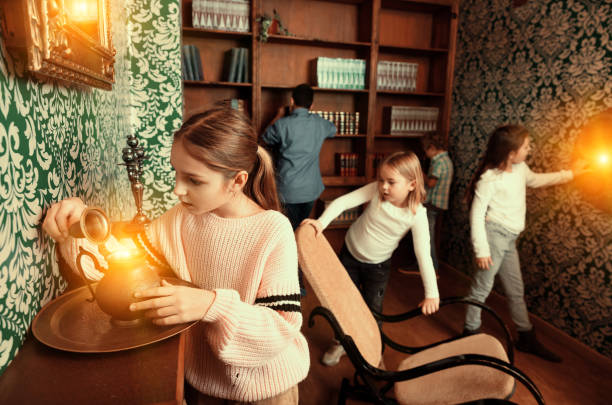
Something has changed recently about how people spend time together. Take a stroll through any entertainment district on any given weekend and you’ll see a line of people with a mission, determined to go from place to place without fail. They aren’t all going to restaurants and theatres, they’re just as likely going to escape rooms, and the energy is completely different from a normal night out.
Now it didn’t happen overnight, but somewhere along the line it’s clear that what was once a novelty has evolved into a legitimate opportunity for groups to do something, and the more you think about why the more it makes sense.
Standard Group Options Fall Short
Group gatherings have one major flaw; the second people gather they’re lost in their own worlds. Sure, they’re together at one table and one establishment, but half the group is on their phones talking to people who aren’t there, conversation spirals into other tables, and the whole thing is moot. When it’s time to leave, it’s no longer “we did something” but merely “we spent time together.”
At least with dining, people can engage more with intimate conversation. Yet there’s still an awkward exit once the food is consumed and the check has been paid. That natural end of the situation is rarely impactful on anyone except those waiting for a situation to conclude.
What people need, even if subconsciously, is something more engaging as a group. Not merely coexisting in one space, but having a unified goal in which all hands need to be on deck. Like escape rooms.
Puzzles Create Real Connection
Escape rooms puzzle groups in a way they didn’t know they needed. From the second someone walks in the door, they’re thrust into action. There’s no standing around to see if a conversational opener will help get the group into a rhythm. From the get-go, it’s obvious what needs to be done.
It’s fascinating how puzzles break down social barriers. That work colleague with whom you’ve shared one or two small talk conversations? Now you’re both digging through drawers looking for a clue and getting giddy about each new discovery. That friend of a friend who doesn’t really know anyone? They’re throwing out ideas and everyone cheers along as new revelations come together with collaborative thinking.
Merely puzzling people in confined rooms takes away the pressure of being sociable and fosters greater bonding than any forced mixer could create. For anyone eager to try it out, an escape room in South West London will have great options depending on group size and challenge.
Actually Accomplishing Something Matters
Most group activities are passive. You eat. You watch something. You sit around and chit chat. Escape rooms put you in the middle of everything and when you finally solve that last puzzle or crack that door code, it feels good.
People remember these moments. The random coffee shop three months ago? Forgotten. But your group who escapes with only ninety seconds left on the clock? Or your group who realized that clue had been staring them in the face the entire time? These memories stick.
It’s not just about taking a photo for bragging rights after escaping, but celebrating something that actually transpired and something your group did together.
They Appeal to Everyone
It’s hard to get a group together to do something because everyone has their own agendas. Extroverts need high energy while introverts need focus. Some are good on a budget while others are ready to splurge.
Escape rooms cater to most competing interests. Those with competitive spirits get to exert their energy with a time limit. Academic problem solvers get their mentally-inclined fix. Even quieter members get their voices lifted as different puzzles require different types of critical thinking.
In addition, the only financial issue comes with booking at different times. Everyone pays for their own ticket up front and once it’s done, it’s done.
The Memory Factor
Ask someone what they were doing six months ago on a random Saturday. They’ll probably return your inquiry blankly. Ask someone what they were doing two months ago in an escape room and they’ll detail every moment. The second someone cracked the code. That transformative clue that was so simple yet no one thought about until someone finally pieced it together—and time was almost up.
That’s not just a story waiting to be told. That’s part of the joined experience that everyone shares. Inside jokes grow from what happened in the room. People refer back to puzzles down the line because it’s tangible as opposed to vague recollections about “the time we hung out at that one place.”
They Work for Any Occasion
Escape rooms work for any occasion; a birthday party, a work-related teambuilding venture, a family get together—just friends wanting something different? Sure.
They are engaging enough for adults without being too challenging for younger folks, either. They’re also easy to plan as escape rooms typically have a timed amount of engagement.
The Ongoing Trend
Ultimately escape rooms become the automatic choice because they operate successfully. Everyone walks away feeling good about themselves and about each other because they’ve engaged in meaningful conversation. In addition, the memories from specific moments stay with everyone longer than something casual ever could.
There’s a great sense of reliability that comes with attempting to get a group together whether it’s for celebrations, team building endeavors, or merely needing to do something else besides the expected situation. Escape rooms have proven their worth in reliability as they unite individuals over shared struggles while forming narratives that everyone will remember.
That doesn’t mean traditional gathering hot spots like restaurants will go out of style, but they won’t be the default option anymore. When groups want more than simply existing in one space together, they are choosing experiences that foster genuine connections—and for the moment, escape rooms facilitate this better than any other option could.