

Table Of Contents
- Why Dock Planning Matters
- Start With The Property And Shoreline
- Choose The Right Dock Style
- Build Safety Into The Layout
- Select Materials For Long-Term Use
- Plan For Water Levels And Weather
- Check Permits, Rules, And Access Needs
- Create A Simple Maintenance Plan
- Common Questions About Waterfront Docks
Lake Murray waterfront living can center on boating, fishing, swimming, or simply spending time beside the water. Thoughtful planning helps homeowners create docks that fit their shoreline, support everyday use, and remain practical when weather and water conditions change.
A good dock is more than a path from shore to boat. It is part of the property’s access route, gathering space, and water safety plan. On Lake Murray, a design should account for the bank, water depth, changing lake levels, boat traffic, and the needs of everyone who will use it. For more information on dock options for your property, visit Destination Dock’s Lake Murray dock services.
Why Dock Planning Matters
The most useful dock begins with a clear purpose. A household that primarily boards a pontoon boat may need a different layout than one that spends weekends fishing, swimming with children, or hosting neighbors by the shoreline. Designing around actual habits can prevent awkward walkways, crowded slips, and unused corners.
It also helps to plan for the full range of users. A narrow route that feels fine for one confident adult may be less comfortable for a guest carrying gear, a child in a life jacket, an older family member, or someone guiding a pet back to shore.
For homeowners comparing layouts, discussing intended use, shoreline limits, and access needs with experienced professionals can help turn a general idea into a practical list of design questions before making construction decisions. Dock builders familiar with Lake Murray can provide insights into local conditions and requirements.
Start With The Property And Shoreline
Before selecting materials or features, evaluate the route from the house to the water. Measure the distance, note the bank’s slope, and consider whether steps, a ramp, or a stabilized path may be needed. Look closely for erosion, exposed roots, soft ground, rocks, and low spots that can collect water after rain.
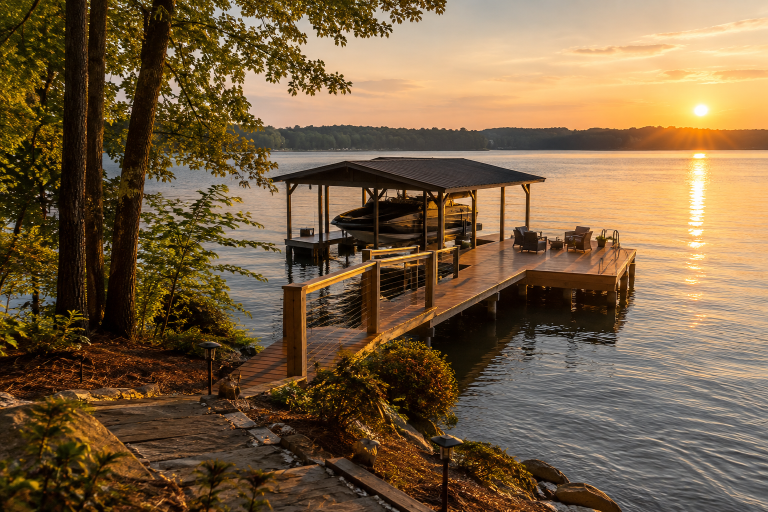
Two Lake Murray properties on the same cove may need very different solutions. One may have a gradual approach and deeper water near shore, while another may have a steep bank, a shallow edge, or a more exposed position where wind and waves reach the dock more directly. Shade also matters because damp, shaded surfaces can need more frequent cleaning to maintain traction.
Choose The Right Dock Style
Fixed Docks
Fixed docks can provide a steady walking surface and may suit sites with appropriate support conditions. Their elevation should be carefully considered because a structure that feels convenient at one water level may become less useful as the lake rises or falls.
Floating Docks
Floating docks move with the water, which can make boarding and swimming access more consistent as levels change. They still need connections, anchoring, and transition points that are appropriate for the site, especially where wind or wave action can increase movement.
Hybrid Docks
A hybrid layout can combine a more stable shore-side connection with a floating section farther out. This approach may offer a balance between a comfortable entry route and flexibility at the water. The transition between sections deserves special attention so it remains easy to cross under normal conditions.
Build Safety Into The Layout
Safety works best when it is built into the layout rather than added later. Keep walking paths open, avoid unnecessary trip points, and select surfaces that provide reliable footing when wet. Place cleats, bumpers, ladders, and storage where they serve their purpose without narrowing the main route.
- Use decking with drainage and a slip-resistant texture suited to wet conditions.
- Mark steps, edges, and level changes with low-glare lighting.
- Consider handrails where ramps, stairs, or steep shore approaches make them helpful.
- Keep a clear swimming entry and avoid placing obstacles near ladders.
- Store life jackets where they are dry, visible, and easy to reach.
Life jackets should not be buried beneath other equipment or locked away where they cannot be reached quickly. The U.S. Coast Guard life jacket guidance emphasizes proper fit, serviceable condition, and ready accessibility, all of which are useful principles for dockside storage.
Select Materials For Long-Term Use
Material choices affect traction, heat retention, maintenance, and repair options. Aluminum framing is often selected for corrosion resistance and lower weight. Treated wood offers a familiar appearance but should be inspected for splitting, fastener issues, and surface wear. Composite decking and plastic lumber can reduce splinter concerns, although their texture, temperature in direct sun, drainage, and manufacturer care requirements should still be compared.
Rather than choosing solely by initial price, consider how the material will perform in wet weather, under strong sun, during routine cleaning, and from the occasional impact of equipment or watercraft. Replacing a small damaged section can be easier when matching materials and hardware are available.
Plan For Water Levels And Weather
Lake Murray is a managed reservoir, so water conditions should be part of the design conversation. The lake’s operator notes that water levels can change seasonally due to rainfall and generation, and that its Lake Murray shoreline information includes current water levels and residential permit resources. A dock plan should account for these changes rather than assuming year-round access will look the same.
Review prevailing wind, typical wave exposure, storm runoff paths, and the likelihood of floating debris reaching the shoreline. Connections, hinges, posts, anchors, and mooring hardware should match site conditions. Electrical equipment near water requires particular care and should be installed and maintained by qualified professionals.
Check Permits, Rules, And Access Needs
Do not finalize a design before confirming applicable requirements. Lake Murray shoreline projects may require review of docks, ramps, retaining walls, lifts, and related improvements. Property owners should verify dimensions, placement, setbacks, shoreline restrictions, and any neighborhood rules before purchasing materials or starting work.
Plans should also consider future access. A route that works today may become harder to use if erosion changes the bank or if a family member later needs a smoother path, handrail, or more stable transition to the dock.
Create A Simple Maintenance Plan
Small inspections can identify issues before they become larger repairs. Check the dock before the primary boating season, after major storms, and again when seasonal use slows.
Seasonal Dock Checklist
- Inspect decking, bolts, brackets, anchors, and railings for movement or damage.
- Remove algae, leaves, fishing line, branches, and standing water.
- Check bumpers, cleats, ladders, lights, covers, and cords.
- Look for signs of bank erosion or shifting connections near shore.
- Take dated photos to help identify gradual changes over time.
Common Questions About Waterfront Docks
Should A Dock Be Fixed Or Floating?
The answer depends on shoreline conditions, water-level variation, intended activities, and local approval requirements. A fixed dock may feel more stable, while a floating design can adjust with the water.
What Makes Dock Decking Safer?
Good traction, drainage, secure fasteners, regular cleaning, and a surface that remains in sound condition all contribute to safer footing.
How Often Should A Dock Be Inspected?
Pre-season and post-season inspections are a sensible baseline. Extra checks after high winds, heavy rain, flooding, or unusual wave activity are also wise.
Final Thoughts
A well-planned Lake Murray dock should make time on the water easier and safer without overlooking the shoreline itself. By matching the layout to the property, choosing materials thoughtfully, planning for changing conditions, complying with local requirements, and maintaining the structure regularly, homeowners can make better long-term decisions regarding their waterfront access.