

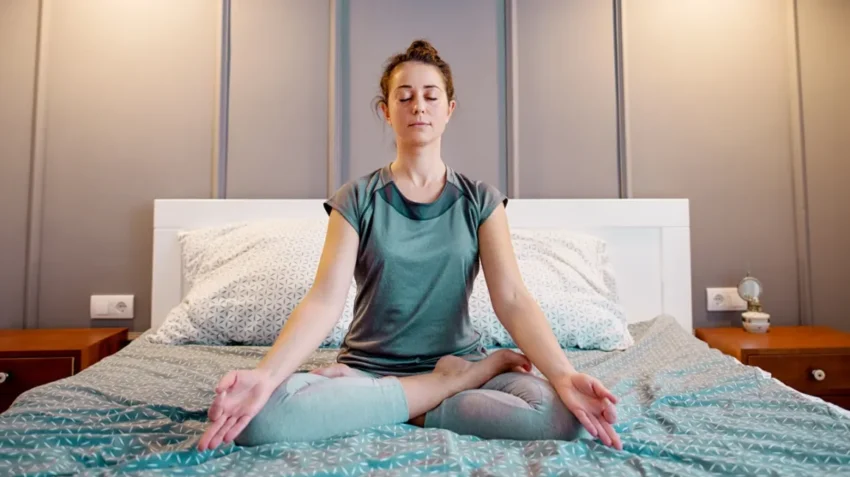
Stress doesn’t magically disappear just because it’s bedtime. If you’re worried, anxious, or mentally racing from one thought to the next, falling asleep can feel impossible. But when your head hits the pillow is usually when this kind of low-grade brain buzz activates most vigorously. Your reaction to all the stimulus and stressors of the day was to throw a hot, heavy blanket of cortisol over the top – which helped you get through the day, but makes it impossible to drift off.
Harnessing Scent To Reset Your Nervous System
Scent is unique in its ability to access our limbic system. Before we even consciously register it, the smell of fresh-cut grass or a particular perfume can change our emotional state and connect us viscerally to memories long forgotten. Our limbic system also plays a big role in sleep, which is why we can hack bedtime by using the right smell.
Lavender is the cleanest and most well-researched option; in one study, a linalool (the compound responsible for lavender’s smell) foot bath lowered heart rate and reduced anxiety. Ylang-ylang and bergamot smells also work their magic in similar olfactory fashion. Add a few drops of lavender, ylang-ylang, or bergamot essential oil in a bedroom diffuser twenty minutes before you plan on going to bed. The smell builds in the room before you enter it, letting your brain start to associate that scent with rest and do some of the work for you.
Adding Cannabinoids For Deeper Release
Stress affects the body, not just the mind. Cannabinoids can help ease muscle tension, jaw clenching, and persistent shallow breathing to a degree that herbs alone cannot (for some people, at least).
The endocannabinoid system has been found to play a major role in regulating mood, the perception of pain, and even the architecture of sleep. Compounds like CBD and CBN can interact with this system to help restore a natural balance, reducing that physical tension in a way that’s not sedating. Microdoses of THC in particular, from indica-dominant varieties rich in the terpene myrcene, will provide a level of deep muscle relaxation that’s hard to achieve without cannabinoids.
Quality matters here, especially with dosing. Sourcing products from a reputable Cali dispensary means you’re working with lab-tested material where potency and cannabinoid ratios are verified – which is the only way to dose predictably and actually know what effect you’re working toward. Randomly potent or mislabeled products will undermine the whole routine. Start low. The goal is a subtle physical ease, not sedation so deep you feel foggy in the morning.
Brewing An Evening Tea That Actually Does Something
The process of preparing tea is just as important as the final product. When you boil water, let it steep, and sit calmly while holding something warm in your hands, you’re physically indicating that the day is winding down.
Start with chamomile, a mild sedative that contains apigenin, an antioxidant that may improve sleep by binding to certain receptors in the brain that promote drowsiness and reduce anxiety. Add valerian root for an extra sedative effect; it has been used for centuries to treat insomnia and nervousness, and when consumed with chamomile, it can help ease you into dreamland without leaving you feeling too groggy.
Drink your tea in a low-lit room, away from any screens. The warmth, the darkness, the digital-detox trifecta, and the compounds from the plants send a strong message to your internal body clock: It’s time to sleep.
A 30-Minute Evening Protocol
Nearly 43% of all adults say that stress has caused them to lie awake at night at least once in the past month (American Psychological Association). A 30-minute wind-down ritual takes that fact head-on for many, and should be a generally simple thing to get into your schedule.
T-minus 30 minutes: Shut off your screens. Start your diffuser with lavender or bergamot. If you’re taking a cannabinoid product to relax, take it now, while it has time to take effect before you’re in bed.
T-minus 20 minutes: Steep your chamomile and valerian. As in, tea. Do so in a room that is not your regular work room or TV room. Keep the lights low.
T-minus 10 minutes: Light stretches, we’re talking 5 to 8 minutes focused on neck, shoulders, and hips. Common stress storage spots.
T-minus 0: Bed. The tea’s hit, the scent’s in the air, the warmth has your muscles relaxed more than they were 30 minutes ago.
Building Consistency Over Quick Fixes
Individually, these things may not seem like they would be effective over time, especially for nights that are bad no matter what you do. But the real strategy is repetition. Your nervous system learns from familiar associations – the same smells, warmth, and sequence of low-stimulation activities. Adaptogens like ashwagandha, taken regularly most nights over weeks, also help support your body’s resistance to stress by creating a pattern of relaxation and routine that you can rely on, even if your days are particularly rough.
The goal isn’t a perfect night of sleep from the first attempt. The goal is a sensory environment that your body eventually recognizes as safe. Build that, and the sleep often follows.