

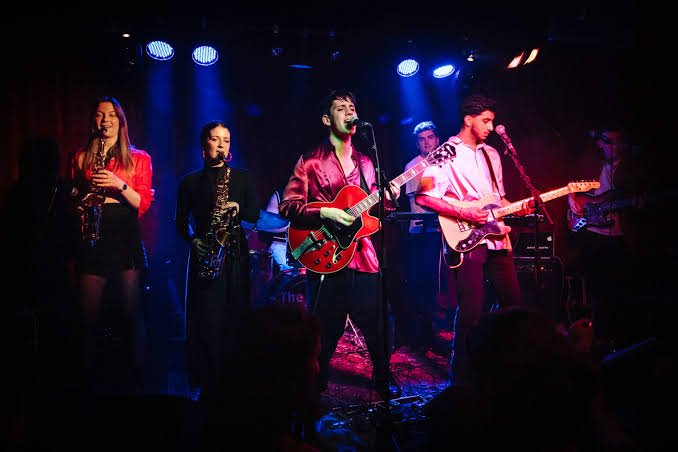
The greatest live music experiences are not ones you see posters for. They are the second set at an open mic. The house show three blocks from your hotel. The band that the bartender recommended you see because you asked the right question. Not because you didn’t do your homework. Because you knew where to look and when to stop looking.
Skip the aggregators. They’re built for the wrong thing.
Big ticket, national websites are built to drive sales of hundreds of thousands of tickets at a time. The kind of events you want are the opposite of that. The kinds of events you want to see are posted by small venues and DIY promoters only on the local subreddit, the local facebook events page, or a decades-old hyper-local independent music blog that no one outside the area even knows exists.
They are also posted, if the city has one, on the campus radio station’s website or social media. College radio promotes everything that comes through its doors with a religious fervor, because half its DJs are in bands that play the other venue’s open mic nights. One glance at their feeds will net you three shows you couldn’t find anywhere else.
Find the person who knows everyone.
In every scene there is a node, a person or place, where everyone congregates to hear about everything. It might be the open mic night. It might be the person who works at the independent record store. It might be a bartender at a dive bar that looks like it’s straight out of a movie.
Find that node and ask them this question: “Where can we find the local musicians after they play?”
You’ll have a better answer than anything an algorithm could dream of, because you’ve found the person who sees everything.
Think backwards on the streaming sites.
Instead of using Spotify to find new music, use it to find local bands in the town you’re in. Click on their tour dates, follow them on Instagram. Bands post their own house shows and DIY events there sometimes, with far more frequency than places that list venues and events. This is how you find the things that don’t have a ticket site, the things that are a surprise even to the locals, the things you stumble into because you follow a recommendation on a social media site. Because you didn’t know about them, but their algorithm did.
Do your homework on the venues before you spend an evening at one.
Not every dive bar with a stage is a hotbed of underground activity. There’s a very simple way to tell the difference between a scene and a tourist trap: original music versus cover bands.
A five minute scroll through a venue’s social media feed will show you which one it is. If every show is a tribute act or a “hits of the 80s” cover band, that’s not the place to be, no matter how pretty the building is.
Shows that don’t have pre-sale tickets and only sell at the door are also a good sign. It means their built in audience doesn’t need to be wooed with early access passes, because they’re going to come anyway.
That kind of loyalty is a mark of a real scene, not a business.
That’s another thing smaller markets have going for them over larger ones. Sarasota, for example, doesn’t have the sprawl of a major metro area. Once you’ve found the node-the open mic night, or the bartender, or the scene-focused Instagram feed-the whole scene opens up to you quickly, revealing hidden rooms and secret bars, all within a few miles of each other. Spend twenty minutes combing the internet for live local music in Sarasota, and you’ll miss the original singer/songwriter gigs that happen in places that no “top nightlife guide” would dream of writing about, because they’re too “indie” for the casual tourist.
Plan a region, not a venue.
Instead of spending an entire night at one dive bar, find a neighborhood with a few music venues and plan your evening around them. Start with the show that has the earliest start time.
This is the most important tip; you can’t employ any of the others if this one isn’t in place.
Don’t schedule your night around one place and one place only. Have a couple of options, located within walking distance of each other, and start with the earliest one. This accomplishes two things; first, it prevents you from wasting an entire evening at an empty venue. Second, if you’re at the wrong place at the wrong time, you’ll know it. If the first band’s fans are spilling out onto the sidewalk, chatting amongst themselves, and telling everyone they know about the next band, you’re at the wrong show. Follow them. That’s where you need to be.
78% of Americans would rather spend money on an experience than on things, per a Harris poll. That’s why small dive bars continue to thrive all over the country, packing in crowds night after night, in cities and towns that have little or no music infrastructure to speak of. The demand is there; it’s just being funneled into the wrong places by people who think they know what’s best for you, when what they really know is the algorithm.
Let the night dictate itself
After a point. There are only so many strategies one person can employ, and after that, it’s about people and music. It’s about following a fan to her next show, or deciding to stay at the first one because you love the band so much that you want to see them again at the very next place they play. It’s about the possibilities that open up when you’re not looking at a map.